The <head> element of an HTML document is the operational control center of search engine optimization. Before Googlebot, Bingbot, or social media scrapers render the visible visual layout of your web page, they parse the metadata tags embedded within the document head. These tags dictate indexation permissions, declare canonical URL ownership, define social share previews, and construct semantic entity graphs.
Failing to configure essential meta tags—or misconfiguring conflicting directives such as contradictory canonical and robots tags—can cause search engines to de-index key landing pages or display broken, auto-generated snippets on search engine results pages (SERPs).
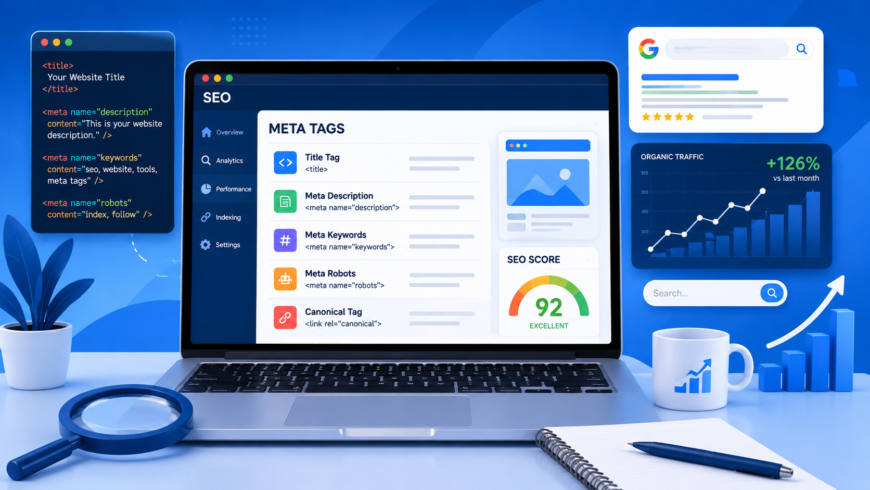
The 10 Mandatory Technical Meta Tags
| # | Meta Tag | Target Standard | SEO & Indexation Impact |
|---|---|---|---|
| 1 | <title> |
HTML5 / Google | Primary headline displayed in search results and browser tabs (Keep between 50–60 characters / 580px). |
| 2 | <meta name="description"> |
Google / Bing | Summary snippet shown beneath the title on SERPs (Aim for 120–158 characters). |
| 3 | <link rel="canonical"> |
RFC 6596 | Resolves duplicate content by declaring the authoritative master URL to search engines. |
| 4 | <meta name="robots"> |
Robots Exclusion Standard | Instructs bots whether to index the page (index/noindex) and follow links (follow/nofollow). |
| 5 | <meta name="viewport"> |
Mobile Web Standard | Enables responsive mobile rendering; mandatory for Google Mobile-First Indexing. |
| 6 | <meta charset="utf-8"> |
Unicode UTF-8 | Guarantees accurate character rendering across international typography and emoji symbols. |
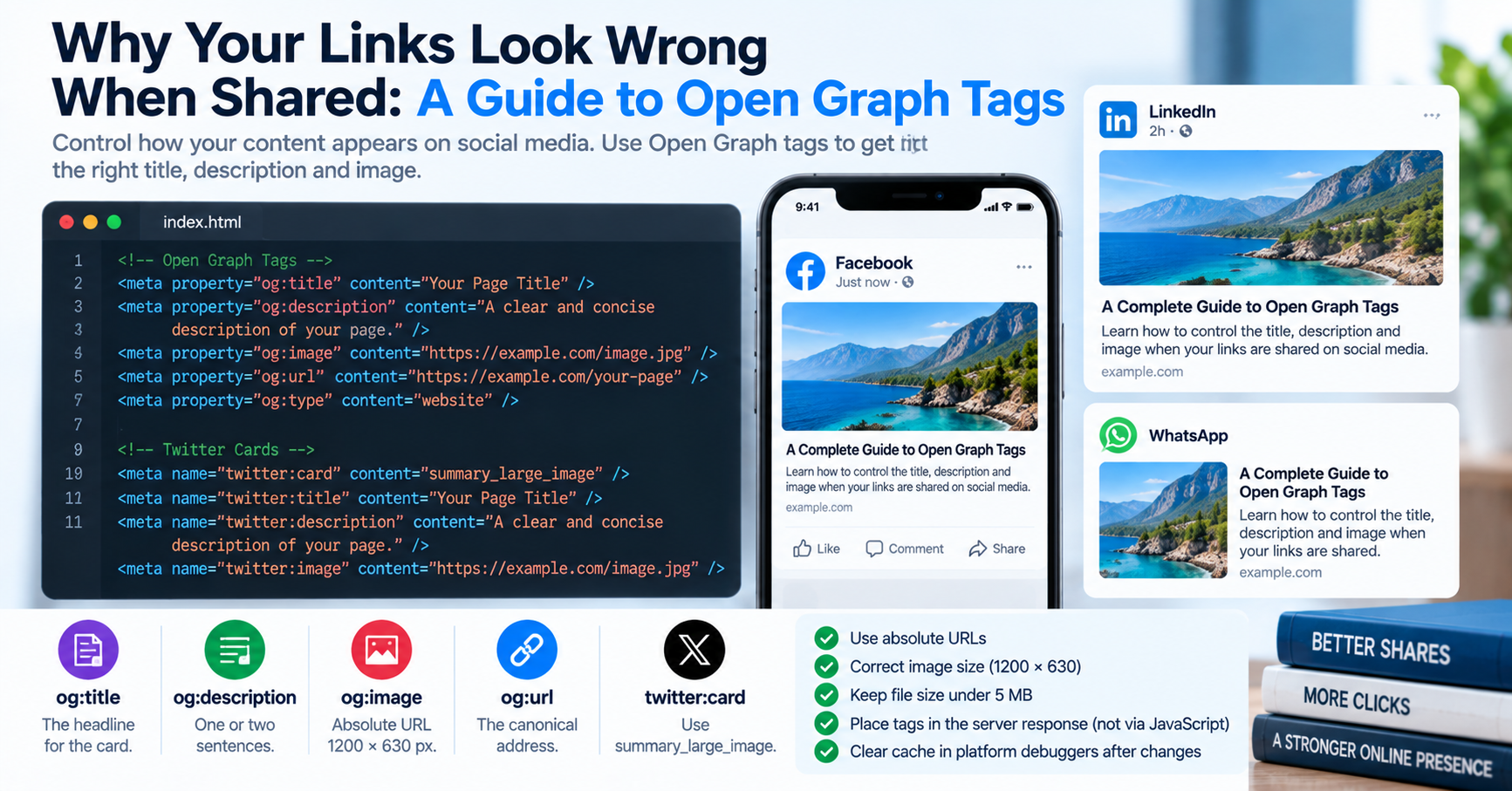
| 7 | Open Graph (og:title, og:image) |
Open Graph Protocol | Governs link preview cards when shared on Facebook, LinkedIn, Slack, and Discord. |
| 8 | Twitter Cards (twitter:card) |
Twitter / X Standard | Configures rich media preview cards (summary_large_image) on X. |
| 9 | Schema.org JSON-LD | W3C Linked Data | Provides semantic knowledge graph entities (Articles, WebApplications, FAQs, Person E-E-A-T). |
| 10 | <link rel="alternate" hreflang> |
ISO 639-1 / 3166-1 | Routes international users to language- and region-specific versions of the page. |
Production HTML Template Implementation
<!doctype html>
<html lang="en">
<head>
<meta charset="utf-8">
<meta name="viewport" content="width=device-width, initial-scale=1">
<title>Text Separator - Split, Reformat & Delimit Lists | TU Web Tools</title>
<meta name="description" content="Split and clean text lists with custom delimiters, tabs, commas, and newlines. Client-side, privacy-first processing with zero server uploads.">
<meta name="robots" content="index, follow, max-snippet:-1, max-image-preview:large">
<link rel="canonical" href="https://tuwebtools.com/tools/text-separator">
<!-- Open Graph -->
<meta property="og:site_name" content="TU Web Tools">
<meta property="og:type" content="website">
<meta property="og:title" content="Text Separator - Split, Reformat & Delimit Lists">
<meta property="og:description" content="Split and clean text lists with custom delimiters. Client-side processing.">
<meta property="og:url" content="https://tuwebtools.com/tools/text-separator">
<meta property="og:image" content="https://tuwebtools.com/assets/img/logo.png">
<!-- Twitter Cards -->
<meta name="twitter:card" content="summary_large_image">
<meta name="twitter:title" content="Text Separator - Split, Reformat & Delimit Lists">
<meta name="twitter:description" content="Split and clean text lists with custom delimiters.">
</head>Interactive Diagnostic Checklist
- [ ] Audit your live webpage metadata instantly with our Meta Tags Checker.
- [ ] Verify title tags do not exceed 60 characters to avoid search result truncation.
- [ ] Confirm canonical tags always point to absolute HTTPS URLs.
- [ ] Verify all social image tags reference accessible, absolute URLs with 1200x630 pixel dimensions.